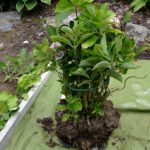
Many of you have probably seen bits and pieces about hydrangea care late season. In fact, I have been sourced on several of those articles. Fall will be here before you know it, and that will ring the starting bell to consider what you need to do with your hydrangeas.
TAKE STOCK OF THIS SEASON’S SUCCESSES AND FAILURES
For gardeners in the Northern Hemisphere, we are coming into the home stretch for considering autumn hydrangea care. Where I garden in U.S. Zone 5b, we are almost out of time by mid-August. But if you garden where it is warmer, you have a few more weeks. Here’s what to keep in mind.
First things first… Take the time now to assess how your plants are performing. With the change in our climate, it is not unexpected to need to move some plants around. I personally have to do that with 2 of my big leaf hydrangeas. Between losing some shade trees in storms and the warming climate, they are just cooking!
TRANSPLANTING
If you can move your plant to a protected spot, do it now. It needs time to establish roots before the ground freezes (at least 6 weeks before your first frost date). If you can plant something with winter-persistent foliage, like an azalea, rhododendron, or conifer that will shield your hydrangea, do it now. Just watch out for future root competition for water.
A non-flowering hydrangea is another reason to make a change. Maybe it needs a more protected place, or maybe it’s time to replace it. In that case, dig it up and donate it to your local town: library, house of worship, community center, etc. If your local garden club has an annual plant sale, they may want it for the 2027 event. Those that aren’t planted in protected locations as I described in my other blog posts, HERE and HERE, need a little help if the flower buds are to have their best chance of making it through the coming winter. It’s a hard lesson we learned this past season, as many plants were killed to the ground.
SOME HYDRANGEAS NEED TIME TO SET THEIR BUDS
Remember, if your plant is a big leaf (H. macrophylla) or mountain (H. serrata), you need to let the buds form for next year. That means leaving it alone and outside for a period of at least 6-8 weeks after nighttime temps are consistently 60 degrees or below. It may even drop all its foliage, at which time you can safely assume it is now asleep. The foliage drop is your signal that the plant has gone completely dormant.
THE SCIENCE YOU NEED TO KNOW
If you fool around with your plants too late in the season, you risk distracting them from 2 important tasks. First, your big leaf (macrophylla) and mountain (serrata) plants start to make next year’s flowers under 2 simultaneous conditions: nights consistently below 60 degrees and short day length (after June 21 in the Northern Hemisphere). We are on the cusp of those cooler nights (thank heavens!), so bud set is right around the corner. The second thing that your plants need to do is settle down to go into a dormant state.
So if you prune, fertilize, etc., now you will stimulate them. They will put their energy into developing new growth (which might not survive their coming dormant period), and you will distract them from their main job of setting up next year’s flowers before they enter their rest period.
A FEW LAST THINGS YOU CAN DO
What you can do now is finish up any cutting you need to do. I am very cautious about deadheading this late in the season. Those spent flowers serve a useful purpose as umbrellas to protect sleeping flower buds in the stems over the winter. They can also be interesting focal points in your winter garden as they catch the ice and snow.
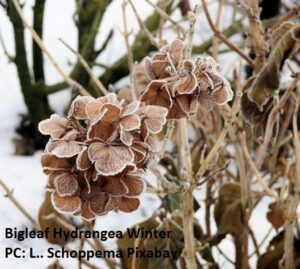
Hydrangea flowers can look stunning in winter
CUT LOW-LYING STEMS
What I usually cut this late in the season are low-lying stems that are growing sideways.
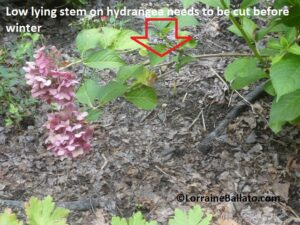
Low-lying hydrangea stems can be candidates for new plants for next year
Since I live in a snowy climate, it’s a sure bet that those stems will get pulled down even further and probably break under the weight of the ice and snow. Rather than risk causing damage to a plant, I simply remove the stem.
MAKE MORE PLANTS
If you want to make more plants, you can gently bring these low stems down to make contact with the ground. Wound them slightly on the side that touches the ground and sprinkle some rooting hormone on the cut.
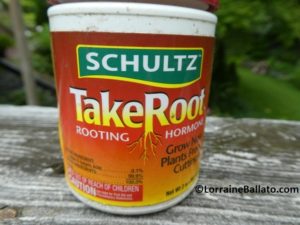
One commercially available rooting hormone
Bury the cut and hold it down with a rock or maybe a ground staple or two. Next spring you should have roots at that cut which can then be severed from the mother plant. Voila! Another hydrangea for your garden.
REMOVE DEAD STEMS
I also cut out any dead stems that have developed during the season for one reason or another. They are so easy to spot now and will make my spring cleanup much easier.
SET YOURSELF UP TO START CLEAN NEXT SEASON
The other thing to do in autumn is check on your plants’ disease condition. Do the leaves have spots on them? Look closely and you’ll probably find spotted leaves at the base of the plant and sometimes deep inside the foliage.

This is what Cercospora leaf spot looks like on a big leaf hydrangea
With a gloved hand, physically remove each and every one of them and disinfect your gloves/tools as you move among your plants. Be aware that fungal/foliar spores winter over and will reinfect your plant next season when the conditions are right. Take preventive measures now.
Once you have cleaned the foliage and trashed it, replace the mulch, as the fungal spores can hide there as well. Do NOT compost it—it’s trash. This is part of your plan for next year to start clean so you can stay clean in 2027.
CUTTING FLOWERS FOR BOUQUETS
Go ahead and cut flowers for bouquets. But do it soon. That cutting will stimulate your plant, which you don’t want to do once the conditions are right for bud set.

Late-season garden bouquet with hydrangeas
GET MATERIALS READY TO WINTERIZE/WRAP YOUR PLANTS
While it is still comfortable to work outside, get organized to protect your plants this winter. You can gather your materials and make your plan so that when the moment arrives, you will be ready. You might decide to make a “cage” that you then stuff with straw, leaves, etc.
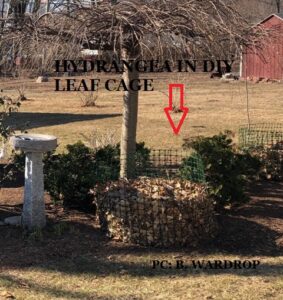
Big Leaf hydrangea encased in leaves for the winter
Or maybe you need to create a protective barrier to shield your plants from the ice and snow that might come your way.
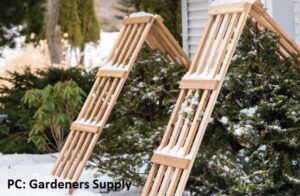
Winter protection for hydrangeas using an A-Frame
In any event, take the time to pull things together in the next few weeks to protect your plants.
UPCOMING TALKS

Lorraine Ballato delivering one of her hydrangea presentations
August 16 (Sunday), The Magic of Reblooming Hydrangeas, 11-1 p.m. Virtual. New York Botanical Garden, Bronx, NY:
I am booking talks into 2027. If your group is interested in joining the fun, be sure to use the “Contact Lorraine Ballato” option. I deliver both live and virtual talks, so geography is not an issue. I’d love to meet you!
REVIEW REQUEST
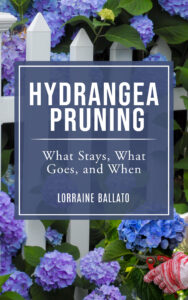
My newest book about hydrangea pruning.

Cover of best-selling award-winning “Success With Hydrangeas”
Fortunately, book sales have continued to be brisk, for which I thank you. If you haven’t already done so, I would appreciate your adding a review on your favorite book site. Reviews help others make their buying decision and help me sell more books. That in turn helps other hydrangea lovers get the most from their plants. It’s a win-win for everyone.
THANKS FOR READING

6 Secrets for Stunning Hydrangea Flowers
Get my FREE mini-guide with 6 fool-proof tips showing how to grow hydrangeas that produce the most amazing flowers.
No spam - I promise!